Prioritisation is a business growth superpower
Business growth rarely fails because of a lack of ambition. It fails because focus gets diluted.
As Q1 draws to a close, many commercial leaders are sitting on valuable insights. What worked. What stalled. What quietly drained time and energy. The real opportunity now is not to do more in Q2 – but to do less, better.
Prioritisation is a business growth superpower because it creates clarity. It helps leaders and teams focus on what truly matters, ensuring time, energy and investment are directed toward work that genuinely drives growth. In uncertain trading environments, clarity isn’t a luxury. It’s a competitive advantage.
When prioritisation breaks down, the consequences spread quickly. Decision fatigue sets in as leaders spend energy on low-value choices. Strategic progress slows because teams are stuck reacting instead of building. When everything is urgent, direction blurs. Pressure rises. Team burnout potentially follows.
The uncomfortable truth? If you don’t set your priorities, something else will.
This is where Q1 learnings become powerful. Q2 should be shaped by evidence, not instinct. What delivered measurable impact in Q1? What created motion without momentum? What looked important but didn’t move the needle? Growth accelerates when you carry forward only what matters.
One simple but effective tool many leaders use and we adopt in Quantic is the Eisenhower Matrix.
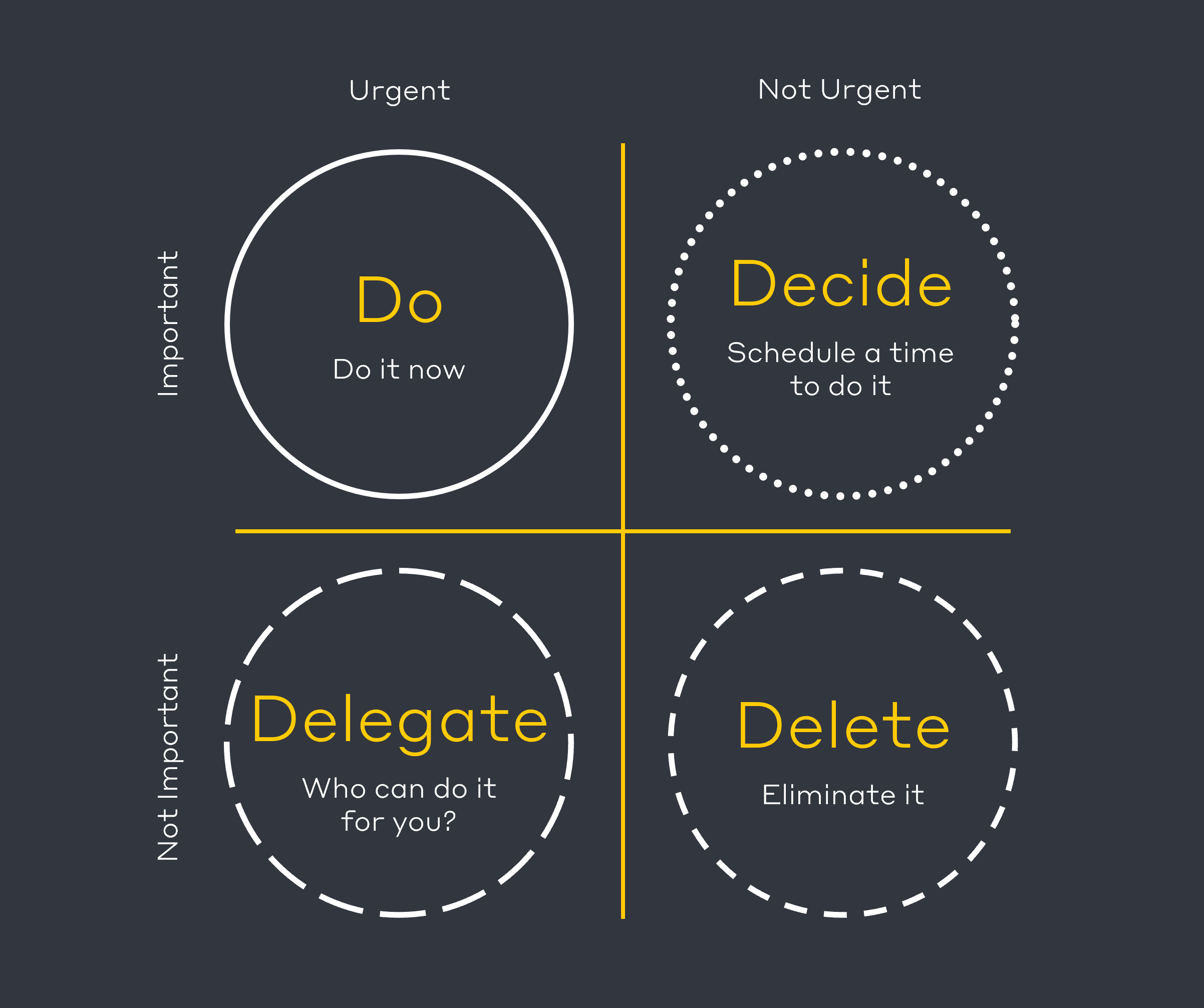
It helps teams separate urgency from importance by categorising work into four clear quadrants:
- Important and urgent: critical issues that need immediate attention and directly impact performance.
- Important but not urgent: strategic work that drives long-term growth. This is where leaders should spend more time.
- Urgent but not important: tasks that demand attention but add limited value. These should be delegated where possible.
- Not urgent and not important: distractions that can be reduced or removed entirely.
The matrix exposes a common growth trap: spending too much time in urgency and not enough in importance.
Great leaders protect focus. They say ‘no’ more often. They design their, and their Teams’ time intentionally. And they model prioritisation for their teams. When leaders are clear, teams move faster – with less friction.
As you move into Q2, choose clarity over complexity.
News and stories
SEE ALL
Quantic’s guide to achieving your growth ambitions
At this time of year, many of us start to plan our personal goals and ambitions for the year ahead — more time with the family, getting super-fit or finally...

Why integrating Sustainability is good for brands and business

May is the moment: stop managing. Start multiplying.
Many teams lose momentum in May. Energy dips, focus fragments, attentions turn to much needed vacations and the second half starts to drift before it begins. So here’s the question: are you setting up H2 results or quietly slowing them down? Right now, many leaders are still managing, which won’t get you where you need to be at the year end.

Momentum is a growth multiplier – celebrate the early wins and carry the energy forward
Momentum is a powerful driver of sustainable business growth. By focusing on consistent progress, prioritising execution, and celebrating small wins, organisations can build confidence, create opportunities, and accelerate performance. In 2026, businesses that generate and maintain momentum will be best positioned to adapt, grow, and stay ahead of the competition.